Some Directors Fix Broken Franchises. Others Just Break Them Worse.
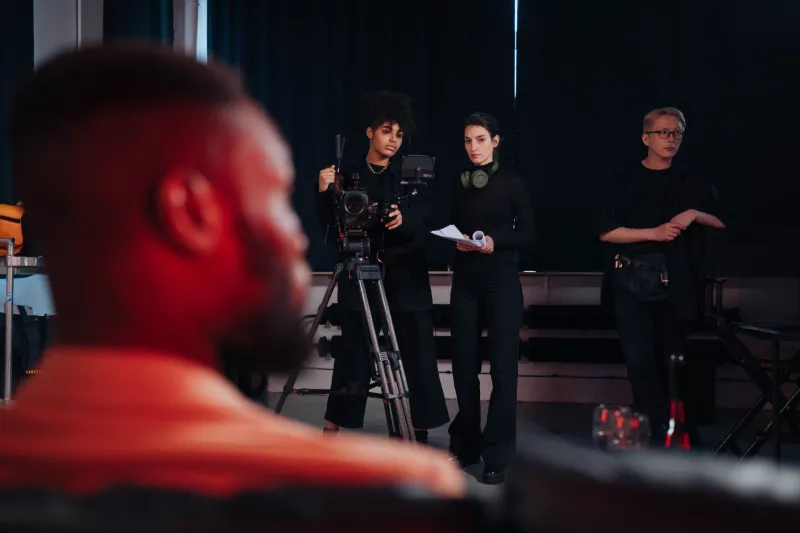
Let's be honest: handing a director a legacy franchise is essentially giving someone your childhood bedroom to redecorate. Maybe they treat it like sacred space. Maybe they rip out the carpet, paint everything beige, and call it a creative vision. The results are never neutral. Either the whole internet is weeping happy tears in a movie theater parking lot, or everyone's composing furious Reddit threads at 2 a.m.
So what actually separates the franchise whisperers from the franchise wreckers? Because it's clearly not just talent. Hollywood is full of genuinely skilled directors who have walked into beloved universes and left scorched earth behind them. And then there are filmmakers who inherit something half-dead, breathe life back into it, and somehow make it feel like it was always supposed to be theirs.
The difference, it turns out, is a weird cocktail of ego management, homework, and knowing exactly which rules you're allowed to break.
The Homework Problem
Here's the uncomfortable truth that nobody at a studio pitch meeting wants to say out loud: some directors simply do not do the reading. And fans — especially franchise fans — always know.
The filmmakers who consistently pull off successful revivals share one very specific habit: they treat the existing material like a primary source, not a suggestion. They watch the old films. They read the comics or the books. They talk to the people who built the original. Not because they plan to slavishly reproduce it, but because you can't meaningfully subvert something you don't understand. You can't honor the emotional architecture of a universe you've never bothered to inhabit.
Contrast that with the directors who come in announcing that they're "not really a fan" of the source material as if that's a selling point. As if distance equals objectivity. It doesn't. It usually just equals a movie where the legacy characters feel like props and the new mythology feels like it was assembled from a mood board and vibes.
The homework isn't about being reverent. It's about earning the right to be irreverent.
The Studio Interference Variable
Now, in fairness, we have to talk about the thing that tanks franchise revivals almost as often as directorial missteps: the studio executives who cannot stop touching things.
Some of the most notorious franchise disasters in recent memory weren't purely the director's fault. The fingerprints of committee thinking — multiple conflicting notes, mandated character cameos, endings reshot because a focus group in Ohio got confused — are all over the wreckage. A director can walk in with a coherent creative vision and have it systematically dismantled by people who are optimizing for quarterly earnings instead of storytelling.
The directors who succeed under these conditions tend to have one underrated skill: they know how to protect the heart of their version while giving the suits enough shiny things to feel like they contributed. It's a political skill as much as a creative one. Which is deeply unsexy to admit, but here we are.
The ones who fail under studio pressure usually fall into two camps. Either they fight every battle and lose the war, ending up with a compromised movie and a reputation for being "difficult." Or they capitulate entirely and deliver something so focus-grouped into blandness that it satisfies no one — not the fans, not the studio, not the director who presumably had a personality at some point.
The Casting Calculus
You want to know the fastest way to tell whether a franchise revival is going to work before a single frame is shot? Look at the casting choices and watch how the director talks about them in interviews.
The franchise fixers cast for the story they're telling, not for the press release. They're willing to make choices that seem weird on paper because they've thought about what the role actually requires. They understand that nostalgia casting — bringing back beloved faces just to trigger the serotonin hit — is a loan with brutal interest rates. It works once. Then the audience wants more, and if you can't deliver substance behind the familiar face, the whole thing collapses.
The franchise wreckers, meanwhile, tend to treat casting like a brand alignment exercise. They stack the call sheet with names that photograph well at premieres and generate social media content during production. The result is often a movie that looks great in a trailer and feels hollow at ninety minutes in.
There's also a specific casting trap that kills more revivals than people realize: the director who doesn't know how to integrate legacy cast members with new leads. Get the balance wrong and you end up with either a nostalgia museum (old characters hogging screen time while the new protagonists stand around being introduced) or an awkward handoff where beloved characters are shuffled out so fast that the audience never emotionally transfers their investment. Both versions produce the same result: a franchise that was supposed to expand and instead just contracts.
The Ego Equation
Here's the spicy take, and we're committing to it: the directors who consistently resurrect dead franchises are almost never the ones who need the franchise to be about them.
There's a certain type of filmmaker — talented, critically acclaimed, possibly very good at their own original work — who approaches a legacy property as a vehicle for their personal auteur statement. They want to put their stamp on it. They want the franchise to be the thing that proves something about them as an artist. And that need, that directorial ego in the driver's seat, almost always produces something that satisfies neither the existing fanbase nor the prestige crowd the director was trying to impress.
The counterintuitive truth is that the best franchise revivals often come from directors who are genuinely a little starstruck by the material. Who feel the weight of the thing they've been handed and let that feeling inform their choices. Humility, in Hollywood, is a competitive advantage.
The Formula Nobody Wants to Admit Exists
So here it is, assembled from the wreckage and the triumphs: do the homework, protect the core emotional logic of the universe, cast for the story not the poster, manage your studio relationships like a diplomat, and leave your personal brand ambitions at the door.
None of that is glamorous. None of it makes for a great director profile in a prestige magazine. But it's the pattern. It shows up over and over in the revivals that worked, and its absence shows up just as reliably in the ones that didn't.
The franchise whisperers aren't magic. They're just the ones who understood that inheriting someone else's universe isn't a limitation — it's a contract. And the audience, bless them, always knows when you've broken it.