From For You Page to Forgotten: The Streaming Deal Graveyard for TikTok's Biggest Stars
Congratulations! You went viral. Your face is everywhere. A Netflix executive has slid into your DMs — or, more accurately, had their assistant's assistant reach out to your manager's manager. You're getting a deal. A real one. With a budget and everything.
This is the part where things go sideways.
The TikTok-to-streaming pipeline has claimed more careers than bad press and brand deals combined. What looks like a ladder to the next level turns out, for a surprising number of creators, to be a trapdoor. Let's walk through the wreckage — and try to figure out why the thing that made these people famous keeps disappearing the second someone hands them a production budget.
Why TikTok Fame Is Basically Impossible to Bottle
Before we get to the casualties, it's worth understanding what TikTok fame actually is, because studios consistently misdiagnose it.
When someone blows up on TikTok, it's almost never because they're conventionally talented in a way that translates to traditional media. It's because of something weirder and harder to replicate: intimacy at scale. The shaky camera. The mid-thought editing. The sense that you're watching someone think in real time. The comments section becoming part of the content. The feeling — completely manufactured but completely real — that this person is talking specifically to you.
A Netflix special cannot replicate that. A Hulu scripted series cannot replicate that. The moment you put someone in front of a professional lighting rig with a writer's room and a network note about "broadening the appeal," you have surgically removed the exact thing people liked about them. Congratulations on your pilot order.
The Casualties: A Brief and Painful Tour
The Stand-Up Special Trap
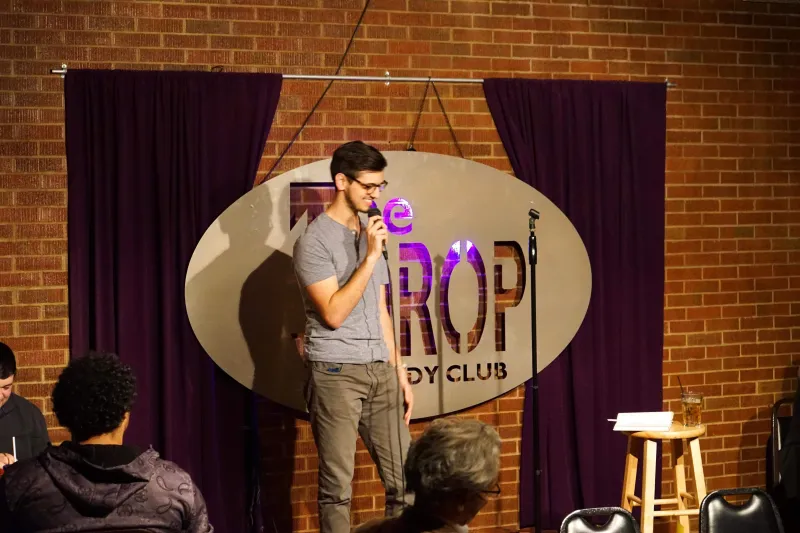
Several TikTok comedians who built massive followings on short-form, reactive, almost conversational humor have landed stand-up specials on major streaming platforms — and discovered that an hour of structured material in an empty theater is a completely different beast. The bits that slapped in 45 seconds feel stretched and labored at four minutes. The spontaneity that made their feed irresistible gets replaced by the mechanical rhythm of setup-punchline-applause break.
The special drops. The reviews are polite at best. The comment section on their next TikTok is full of people saying "you were better before the Netflix thing" — which is brutal, accurate, and completely unhelpful.
The Scripted Series Situation
A few creators have been handed scripted series based essentially on their "vibe" — the assumption being that if you can hold attention for 60 seconds, you can hold it for 22 episodes. This is the kind of logic that sounds reasonable in a pitch meeting and falls apart in a writers' room.
The problem is twofold. First, these creators are often being asked to play a character based on themselves, which is somehow harder than playing a character who isn't them at all. Second, the rawness and unpredictability that defines their appeal requires genuine spontaneity — and scripted television is, by definition, not spontaneous. The result tends to be a show that feels like a tribute band version of the creator's actual personality.
The Lifestyle-to-Content Collapse
For creators whose TikTok presence was built around their actual life — their apartment, their relationships, their unfiltered daily chaos — the transition to produced content creates an almost philosophical crisis. You can't fake authenticity with a production coordinator and a craft services table standing ten feet away.
Some have tried to maintain the "lo-fi" aesthetic even within a streaming context, which ends up looking less like genuine rawness and more like expensive cosplay of rawness. Audiences, who are much smarter than executives give them credit for, can feel the difference immediately.
The Studio Notes Problem
Here's a thing that happens every single time: a creator gets signed, the contract comes with creative input from the platform, and suddenly someone in a conference room is suggesting that the creator "might want to consider" softening that bit, or broadening that reference, or adding a more "aspirational" element to the storytelling.
This is how you get a TikToker who built their brand on being chaotically, specifically themselves delivering content that has been committee-approved into a smooth, inoffensive blob. The edge is gone. The specificity is gone. What's left is technically competent and spiritually empty.
The irony is devastating: the platforms are paying for the thing that their own development process destroys.
The Ones Who Figured It Out (Mostly)
It's not a universal curse. A small number of creators have navigated the transition without completely losing themselves, and the pattern is pretty consistent: they maintained significant control, moved slowly, and treated the streaming deal as an addition to their platform rather than a replacement for it.
The creators who kept posting on TikTok throughout their streaming projects — who didn't disappear into production and then reappear as a polished stranger — tended to fare better. The ones who treated the deal as a graduation, a leaving-behind of the platform that built them, almost universally struggled.
There's also something to be said for creators who went into documentary or reality formats rather than scripted or stand-up, where the camera-following-a-real-person approach is at least structurally closer to what made them famous in the first place.
What This Actually Tells Us
The TikTok-to-streaming graveyard isn't really about talent. Most of these people are genuinely funny, genuinely compelling, and genuinely skilled at what they do. The graveyard exists because the entertainment industry keeps trying to translate a medium it doesn't understand into formats it already knows.
TikTok fame is not a pre-fame waiting room. It's its own fully realized form of stardom with its own rules, its own relationship with audiences, and its own very specific conditions for success. When you yank someone out of those conditions and drop them into a traditional production structure, you're not elevating them. You're just relocating them somewhere their superpowers don't work.
Until streaming platforms figure out how to actually replicate the conditions of short-form intimacy — and a few are starting to try — the pipeline is going to keep churning out the same story: creator goes viral, creator gets deal, creator becomes inexplicably less interesting, creator spends two years trying to get back to where they started.
The For You Page giveth. The content calendar taketh away.